Residential hospitality brings the service principles of an exceptional hotel into private residential life. Thoughtful staffing, responsive operations and personal attention make a home feel easier to manage without making it feel transient. As buyer expectations rise, service is becoming as important as architecture, location and design in defining modern luxury.
Luxury real estate has traditionally been judged by what a buyer can see: the address, the architecture, the finishes and the amenity floor. Those qualities still matter. The newer distinction appears after move-in, in how reliably a residence supports the rhythms of everyday life.
That change explains why hospitality-led service is moving into the center of the luxury conversation. Buyers are looking beyond a long service menu toward a building culture that notices preferences, responds with discretion and delivers the same standard on an ordinary Tuesday as it does during a private event. The result is less about living in a hotel than bringing professional care into a true home.
What Is Residential Hospitality?
Residential hospitality is the application of hospitality standards to the operation of a private residential building. It expands traditional property management beyond maintaining the physical asset to include the resident relationship, the quality of service and the way a building supports daily life.
Florida International University’s Chaplin School of Hospitality and Tourism Management describes the category as a response to the growing expectations placed on luxury condominium teams. Conventional management remains essential, but paying bills, maintaining systems and enforcing building rules do not fully address a resident’s experience. Hospitality adds attentiveness, communication and service judgment to that operational foundation.
In practice, the difference is consistency. A concierge recommendation, a smooth arrival and a prompt maintenance response are individual moments. Full-service living emerges when those moments reflect a shared standard across the building rather than depending on who happens to be working that day.
Why Is Residential Hospitality Becoming More Important?
Residential hospitality is becoming more important because buyers increasingly evaluate luxury through time, ease and trust. A beautiful amenity may influence a first impression, but dependable service shapes ownership over years.
The shift is visible in the language of the market. Hotel-style living, lifestyle concierge services and maintenance-free living all express a desire to remove friction from homeownership. Yet the common need beneath those phrases is not indulgence for its own sake. It is confidence that arrivals, requests, building care and privacy will be handled well.
This emphasis also reflects the complexity of contemporary ownership. Some residents travel frequently or divide time between homes. Others live in the city full time and simply prefer not to coordinate every service, delivery or repair themselves. In either case, a responsive residential team gives the owner one reliable point of continuity.
How Are Branded Residences Influencing Luxury Living?
Branded residences have made hospitality-led ownership more visible by pairing private homes with a recognized standard of service. Their growth shows that buyers place value on an operating promise as well as a physical residence.
According to Knight Frank’s Global Branded Residence Survey 2025, the sector expanded from 169 schemes in 2011 to 611 in 2025 and was forecast to reach 1,019 by 2030. Hotel brands accounted for 83 percent of existing schemes, which helps explain why concierge, valet, housekeeping and other hotel-associated services have become familiar expectations in high-end residential development.
The more revealing finding is that an attached hotel is becoming optional. Knight Frank reported that 82 percent of live hotel-branded schemes shared a site with a hotel, while that share fell to 70 percent in the future pipeline. In North America, 49 percent of pipeline hotel-branded schemes were planned as standalone developments. Buyers can therefore seek dedicated residential privacy while still expecting disciplined service.
For an independent residence, the lesson is useful but specific. A recognizable brand may communicate expectations quickly. The lasting value still depends on whether the building delivers those expectations with consistency.
Does Residential Hospitality Require a Hotel Brand?
Residential hospitality does not require a hotel brand. A private condominium can provide a hospitality-driven experience when its staffing, training, procedures and physical plan are designed around residents rather than hotel guests.
A brand can offer a familiar service vocabulary, but it cannot substitute for execution. The residence still needs people who understand discretion, remember preferences, communicate across shifts and resolve requests without making the owner manage the process. It also needs building systems that support privacy, secure access and dependable maintenance.
The existence of the Forbes Travel Guide VERIFIED Luxury Residences program reinforces this distinction. Its published criteria assess service, quality, attention to detail and the overall resident experience, with approved residential standards, staff training and an independent on-site score. The program demonstrates that hospitality in a residence can be evaluated as an operating discipline, not assumed from a logo.
What Should Buyers Look for in Hospitality-Driven Living?
Buyers should evaluate hospitality-driven living by asking how service works when the sales tour is over. The most useful questions test scope, consistency, privacy and accountability rather than the length of an amenity list.
- Service ownership: Who receives a request, who follows it through and how is the resident updated? Clear responsibility matters more than a large menu of possible favors.
- Coverage and continuity: Which services are available around the clock, and how are standards maintained across shifts, weekends and holidays?
- Training and judgment: How are residential concierge services delivered with discretion, especially when a request involves a guest, a delivery or access to the home?
- Maintenance response: What happens after a problem is reported, and how does the team coordinate access, vendors and communication?
- Residential privacy: Are entrances, elevators and shared spaces planned for owners, or will residents routinely move through a hotel or public venue?
These questions help separate a polished presentation from a durable service model. They also reveal whether the residence understands hospitality as occasional assistance or as part of the way the building is run.
How Does The Laurel Bring Hospitality Into Everyday Living?
The Laurel brings hospitality into everyday living through private residential access, around-the-clock service and amenities supported by an on-site team. The experience begins with a separate entry and lobby, a doorman, private elevators, valet parking and a 24/7 concierge.
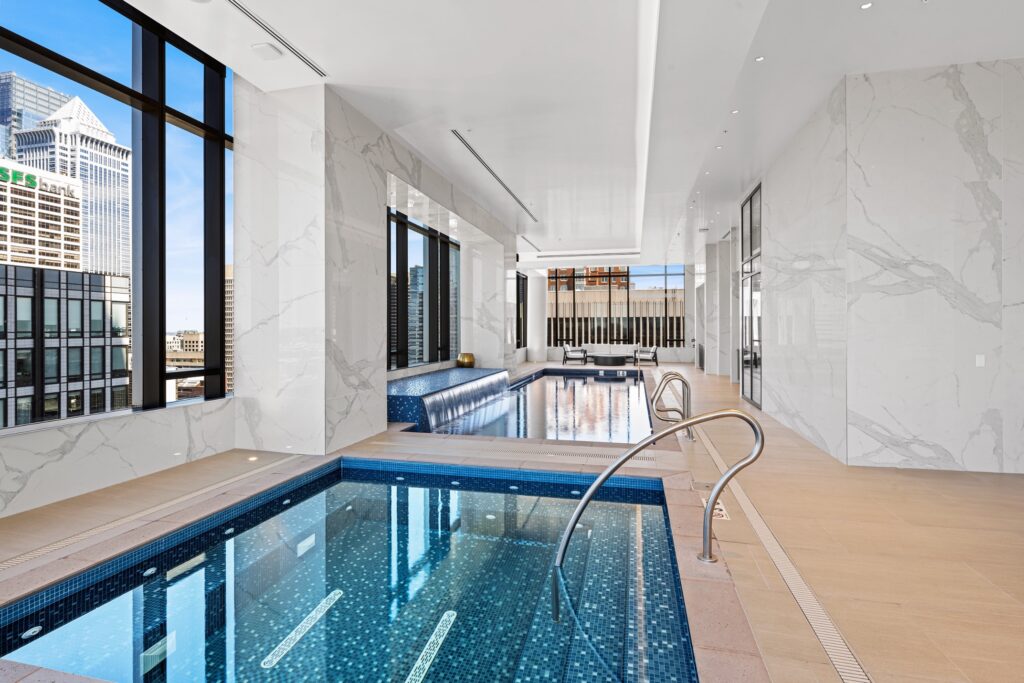
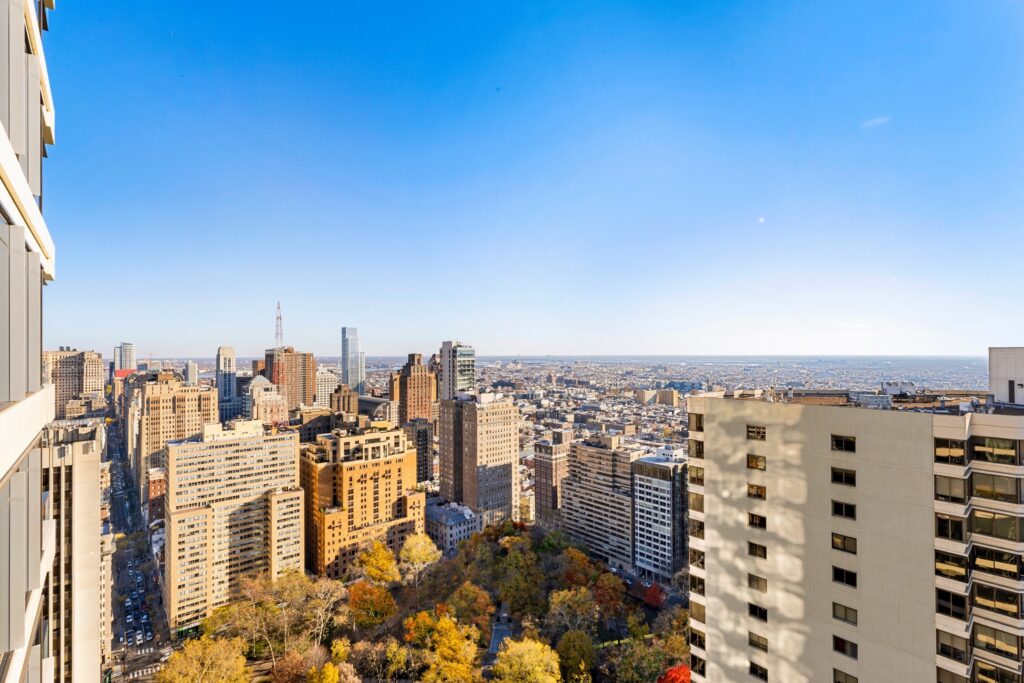
The building’s fully serviced lifestyle also includes in-town car service, 24/7 maintenance and security, plus a private residents club with an indoor pool and spa, fitness and yoga spaces, sauna and steam rooms, an executive meeting room, a guest suite and a terrace overlooking Rittenhouse Square.
Those elements matter together. The separate arrival sequence protects the residential character of the building. The concierge and valet help manage movement through the day. The maintenance and security teams support confidence at home and while traveling. The club spaces extend the residence without requiring owners to manage the facilities themselves.
For owners comparing a condominium with a single-family home, The Laurel’s guide to maintenance-free condominium living explains the practical value of leaving household coordination to an experienced team. This article addresses the larger idea behind that convenience: the quality of ownership depends on how well service is organized and delivered.
How Is Luxury Residential Service Changing?
The future of luxury residential service will be measured less by novelty and more by reliability. As sophisticated amenities become common, the meaningful distinction will be whether a residence can deliver personal attention without intruding on the privacy of home.
That is why the rise of branded residences matters even to buildings without a hotel name. The category has helped buyers articulate a preference for service, but it has also clarified that service must be trained, maintained and experienced over time. This operating standard connects the promise to daily life.
Frequently Asked Questions
What does a fully serviced residence include?
A fully serviced residence typically combines building operations with resident-facing support such as concierge service, valet or parking assistance, security and coordinated maintenance. The exact scope varies, so buyers should confirm which services are included, which are arranged through outside providers and when each service is available.
Is hospitality-driven living valuable for full-time and part-time owners?
Yes. Full-time owners gain everyday assistance and fewer household logistics, while part-time owners gain confidence that the building and residence are professionally supported during travel. The value comes from continuity, even though each owner may use the services differently.
Does hotel-style service mean giving up residential privacy?
No. A well-designed residential service model should protect privacy through discreet staff practices, secure access and spaces reserved for residents. Buyers should ask whether the building shares entrances or amenities with the public and how guest and vendor access is managed.
Why does staff training matter in a luxury residence?
Training turns individual courtesy into a repeatable standard. It helps staff communicate consistently, handle access appropriately, understand resident preferences and respond to unusual requests with sound judgment.
Does residential service replace personal household staff?
Not necessarily. Building teams generally support arrivals, common areas, security, maintenance coordination and concierge requests, while private household staff work inside an individual home. Some owners use both, with the residential team providing the consistent link between the home and the building.
Where Can Buyers Experience This Approach in Philadelphia?
At The Laurel Rittenhouse Square, service is part of the ownership experience from the private arrival to the residents club and the support available throughout the building. Review the available residences at The Laurel or arrange a private appointment to see how a hospitality-driven residential setting feels in person.